HASHIRA

Wholesale

Japanese matcha wholesale, built on partnership

We supply high-quality Japanese matcha to cafés and restaurants, confectionery and food manufacturers, retailers, hospitality groups and importers.

Matcha grades

Available matcha grades

Three grades cover applications from the tea room to the production line.

Matcha grades, typical uses, product counts and Japanese list price ranges
GradeDescriptionTypical usesProductsList price / kg
CeremonialMade only from first-harvest leaf. The highest grade in the range, also used by tea-ceremony schools, with a vivid color and deep umami.Whisked matcha, premium cafés and tea rooms, retail tins.11¥18,200 – ¥93,600≈ US$121 – US$624
PremiumBuilt mainly on first-harvest leaf, with origins blended for balance. Suited to sweets, beverages and food service where quality and cost both matter.Lattes and beverages, patisserie, food service.13¥13,300 – ¥62,400≈ US$89 – US$416
BasicA production grade for stable, large-lot supply. Suited to high-volume uses such as food processing, lattes and confectionery manufacturing.Food manufacturing, ready-to-drink and latte bases, confectionery.5¥9,800 – ¥17,580≈ US$65 – US$117

Prices are the per-kilogram list prices published on HASHIRA's Japanese catalog. Export quotations are issued individually and may differ. US dollar figures are indicative, converted at a fixed ¥150 = US$1.

Open the full catalog

Wholesale service

What you can expect from us

  1. 01

    Flexible lot sizes

    From small lots to large-volume orders, we adapt to the scale and needs of your business.

  2. 02

    A supply network built for stability

    Our own network of tea farmers and tea merchants in more than seven locations across Japan spreads sourcing across origins and reduces exposure to a poor harvest in any single area.

  3. 03

    Competitive pricing

    An efficient distribution structure lets us offer high-quality matcha at competitive prices.

  4. 04

    Specialist support

    Staff who know matcha well support you from product selection through to how the product is used.

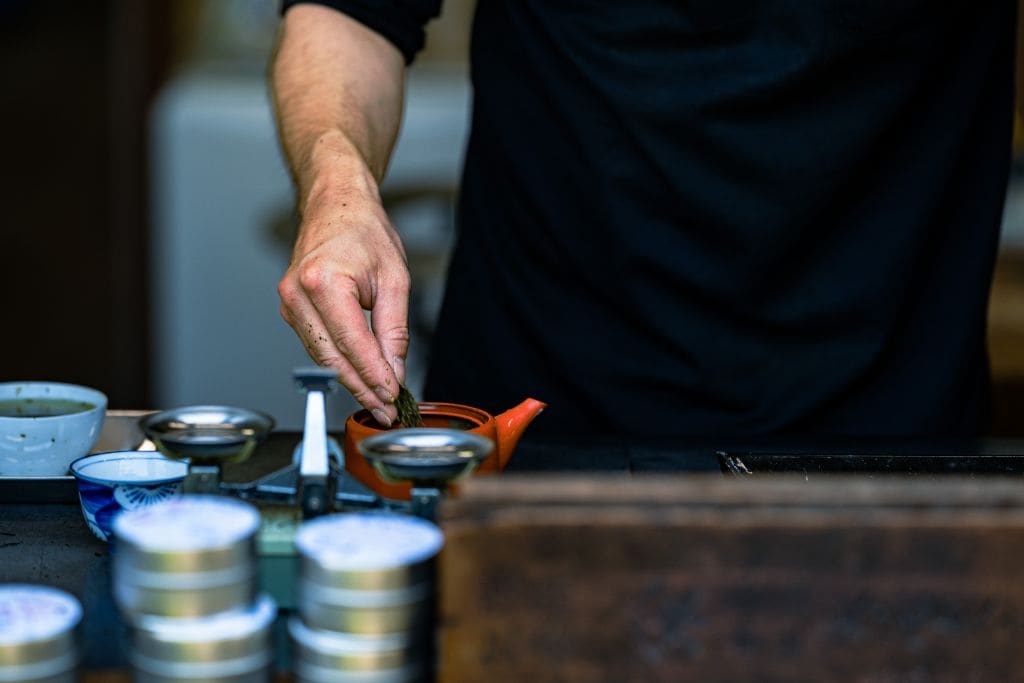
A tea merchant cupping samples during a tasting session

Our strength

Why HASHIRA can supply consistently

HASHIRA has built relationships with leading Japanese tea-ceremony schools. These are cultural partnerships founded on trust, and they sit alongside our direct work with farmers and tea merchants.

  • Priority access to leaf

    Relationships of trust with tea-ceremony schools help us secure raw material with priority.

  • Weather risk spread across origins

    Working with several regions and tea gardens spreads the risk of a poor crop in any one place.

  • Relationships built for the long term

    We build our supply on continuing partnerships rather than one-off transactions.

Supply volumes are confirmed product by product at quotation. Monthly availability for each catalog item is shown in the catalog.

Industry challenges

Why matcha supply is struggling to keep up with world demand

"If it is made in Japan, why is it out of stock?" Overseas buyers often ask us this. Behind the question are structural problems in Japan's tea industry, which HASHIRA describes as follows.

  1. 01

    A shortage of tencha processing capacity

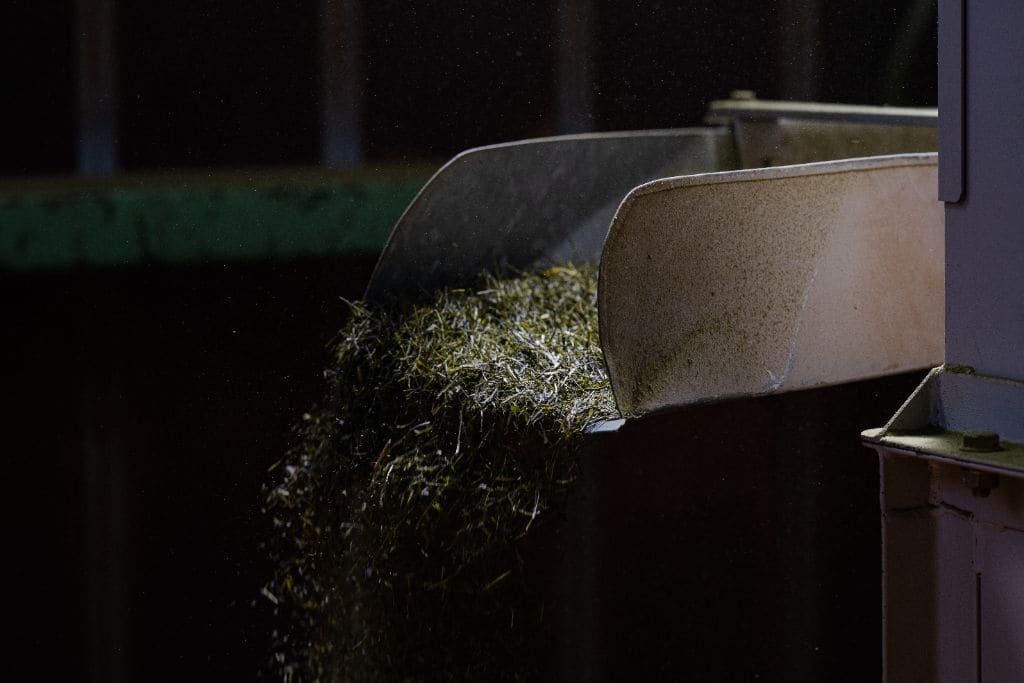
    Leaf can be harvested, but there are not enough factories to process it. Building a primary factory for tencha, or a milling plant to turn it into matcha, takes an investment of several hundred million yen, which is out of reach for an individual farm. Many regions have sencha equipment but no dedicated matcha line.

  2. 02

    Drying bottlenecks and ageing equipment

    Tencha production needs a large three-tier drying furnace that can be 20 metres long. In many Japanese factories this equipment is ageing, and rising material costs have delayed replacement, so drying capacity is the physical limit on output.

  3. 03

    Stone mills and the people who maintain them

    A stone mill for high-quality matcha now takes two to three years to be delivered because so few craftspeople make them. The specialists who re-cut mill surfaces are also declining in number, which leaves more mills idle while they wait for maintenance.

Because of these structural problems, many suppliers find it hard to offer stable supply even of matcha made in Japan. New factories cost several hundred million yen, stone mills take years to obtain, and maintenance depends on specialist craftspeople.

Our approach

How HASHIRA approaches sourcing

We understand these constraints well, and we address them through our own network.

Sourcing is spread across several producing regions and tea gardens instead of resting on one, and each product in the catalog shows its origin, harvest and the volume available each month, so you can plan against published figures.

We keep communication consistent from the first inquiry onward, because a supply relationship depends on both sides knowing what to expect.

See the sourcing network

Industries served

Who we supply

  • Cafés & restaurants

    Cafés, Japanese confectionery shops and restaurants.

  • Confectionery manufacturers

    Confectionery production and bakeries.

  • Retail

    Supermarkets and specialty stores.

  • Hotels & ryokan

    Accommodation and tourism facilities.

  • Food & beverage manufacturers

    Beverage makers and processed-food producers.

  • Overseas buyers

    Importers, exporters and overseas distributors.

Transaction flow

From first inquiry to delivery

We guide first-time customers through each step.

  1. Step 1: Inquiry

    Contact us through the inquiry form. Tell us what you need and anything you would like to ask.

  2. Step 2: Consultation & proposal

    Our staff learn about your requirements in detail and propose products that fit your application and budget.

  3. Step 3: Samples

    On request we send product samples so you can check quality and choose the right item.

  4. Step 4: Quotation & agreement

    Once you have chosen, we issue a formal quotation. When the terms are agreed, we conclude a basic trading agreement.

  5. Step 5: Order & delivery

    After your order we prepare and ship the goods promptly. For continuing business we can set a regular delivery schedule.

  6. Step 6: After-sales support

    We stay in touch after delivery, with guidance on using the product and information on new items.

Trading terms

Minimum order, payment and shipping

Terms published by HASHIRA for business within Japan are shown first. Terms for international orders are confirmed with you individually.

Published terms · Japan

Domestic orders

Minimum order
Depends on the product; orders can be placed from 1 kg. Small-lot orders are accepted.
Payment
Prepayment is standard, with flexibility according to trading volume. Our commercial disclosure also lists credit card and bank transfer, and invoice payment for corporate customers (closing at month-end, payment by the end of the following month).
Shipping
Delivery throughout Japan. Orders within Japan normally ship within three to five business days, depending on stock and quantity. Shipping cost depends on destination and quantity.
Returns and exchanges
We take every care over quality. If a product is defective, contact us within seven days of arrival and we will deal with it.

See the Commercial Disclosure for the statutory statement.
Confirmed by quotation · International

International orders

HASHIRA accepts orders from overseas. The following are agreed for each buyer and destination and are stated in your quotation:

  • Export price and currency
  • Minimum order quantity for export lots
  • Payment method and timing
  • Delivery terms, freight and insurance
  • Export documents and any certificates required by the destination market
  • Lead time and shipping schedule

Payment terms for international orders, including currency and method, are agreed at quotation.

Ask for international terms

Product samples

Check the quality before you order

Samples are available for all 29 products in the catalog.

Choose the product codes you want to evaluate and send the request. We will ask about your intended use and confirm the samples, quantities and shipping with you.

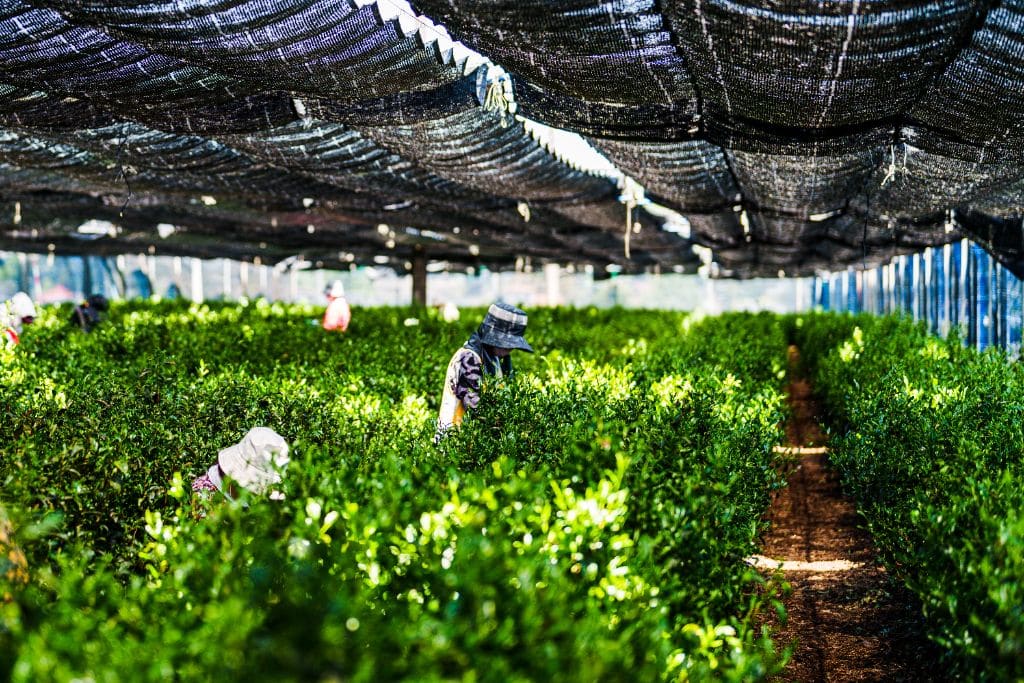
Pickers harvesting tea beneath shade netting in a covered tea garden

Quality assurance

How quality is protected

Quality control at HASHIRA

  • Japanese-grown leaf only

    All matcha we handle is made from selected tea leaf grown in Japan.

  • Sensory and scientific evaluation

    Sensory inspection is combined with scientific analysis.

  • Temperature and humidity control

    Managed consistently from harvest to shipment.

  • Traceability

    Products can be traced back to their origin.

FAQ

Frequently asked questions

Not answered here? Email contact@hashira.biz.

What is the minimum order quantity?

It depends on the product, but orders can generally be placed from 1 kg. We also accept small-lot orders, so please ask.

Can you provide samples?

Yes. Samples are available for all 29 products in the catalog. Request them through the inquiry form or the "Request sample" button on any product. We will ask about your intended use and the products you are interested in.

How long does delivery take?

Orders within Japan normally ship within three to five business days of the order, depending on stock and quantity. Lead times for international shipments are confirmed when we quote.

Do you ship internationally?

Yes, we accept orders from overseas. Export documents, standards and quantities are discussed and confirmed individually for each destination.

Do you offer organic JAS-certified matcha?

Yes. The catalog includes an organic matcha certified under the Japanese Agricultural Standard for organic products (Organic JAS), product code H075.

Wholesale quote

Request a wholesale quote

Send us the product codes, monthly volume and destination. We normally reply within two business days.