

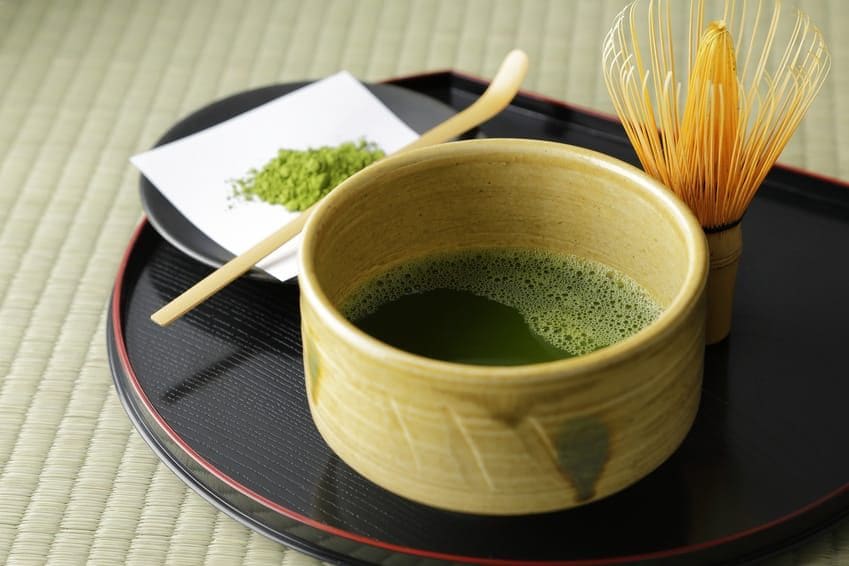
Tea-ceremony grade
Made only from first-harvest leaf. The highest grade in the range, also used by tea-ceremony schools, with a vivid color and deep umami.
Typical uses: Whisked matcha, premium cafés and tea rooms, retail tins.
Buyer's guide
What the grades and harvest terms mean, how to choose a product for your application, and how ordering works.
Matcha grades
Grade names are not standardised across the industry. These are the definitions HASHIRA uses for its own catalog.
Made only from first-harvest leaf. The highest grade in the range, also used by tea-ceremony schools, with a vivid color and deep umami.
Typical uses: Whisked matcha, premium cafés and tea rooms, retail tins.
Built mainly on first-harvest leaf, with origins blended for balance. Suited to sweets, beverages and food service where quality and cost both matter.
Typical uses: Lattes and beverages, patisserie, food service.
A production grade for stable, large-lot supply. Suited to high-volume uses such as food processing, lattes and confectionery manufacturing.
Typical uses: Food manufacturing, ready-to-drink and latte bases, confectionery.
Harvest classification
Japanese tea is classified by the order in which it is picked during the year. The catalog uses the following terms.
| Term | Japanese | Meaning | Products |
|---|---|---|---|
| First harvest | Ichibancha (一番茶) | The first picking of the year. | 22 |
| First & second harvest blend | Ichibancha and nibancha blend (一番茶・二番茶ブレンド) | A blend of first- and second-picking leaf. | 4 |
| Second harvest | Nibancha (二番茶) | The second picking of the year. | 2 |
| Third harvest | Sanbancha (三番茶) | The third picking of the year. | 1 |
6 first-harvest products are also listed as roasted. All Ceremonial products are first harvest.
Japanese sourcing regions
Catalog products list Uji (Kyoto), Shizuoka or Kagoshima as their origin. Some are single-origin, such as the products marked 100% Uji; others name a main origin with one or two more in a blend.
HASHIRA's network profiles 8 regions, each with its own history, climate and production methods. Use the region pages to understand the character associated with each origin, then confirm the details for a specific lot with us.
Product selection
| Application | Start with | Then consider |
|---|---|---|
| Whisked matcha, tea rooms, premium retail | Ceremonial | Origin and cultivar; single-origin Uji items; organic JAS if required. |
| Cafés: lattes and matcha beverages | Premium | Monthly volume against your usage; roasted items for a different profile. |
| Patisserie, confectionery, bakery | Premium or Basic | Test in your recipe with samples; compare a first-harvest item with a blend. |
| Food and beverage manufacturing | Basic | Items with the largest monthly volume; confirm specifications and documents with us. |
These are starting points based on HASHIRA's grade definitions. Samples are the reliable way to decide.
01
Samples are offered for all 29 products. Request two or three candidates so you can compare them in your own preparation. We will confirm the samples, quantities and shipping after your request.
02
HASHIRA evaluates matcha by combining sensory inspection with scientific analysis, manages temperature and humidity from harvest to shipment, and keeps products traceable to their origin. Ask us what documentation is available for the product you choose.
03
The process runs from inquiry and consultation through samples, quotation and a basic trading agreement to order and delivery. Orders can generally be placed from 1 kg, and regular delivery schedules can be arranged for continuing business.
04
Import requirements differ by destination. Before ordering, check with your customs broker or the relevant authority what your market requires for tea products, for example labelling, organic equivalence and any certificates. Tell us what you need and we will confirm the export documents, standards and quantities we can support for your destination.
05
HASHIRA manages temperature and humidity from harvest to shipment to protect aroma and flavor. Storage conditions, shelf life and packaging differ by product; please ask us for the handling specification for the items you order.
Quick answers

Start a conversation
Tell us about your application, target grade and volume. We will reply with suitable products, samples and a quotation.